Stories

Dagrin: 12 Years Gone, But His Legacy Lives On

Da Grin, born Oladapo Olaitan Olaonipekun, was born on October 25, 1984, and died on April 22, 2010. He was 25 years old. Da Grin remains one of the Nigerian rappers who revolutionised the Nigerian rap industry. His music portrayed a cultural significance that infused English with his native dialect and Nigerian pidgin. He depicted a thug life synonymous with street rappers, and he was unabashed about his bad-boy ways. A custodian of mainstream street hip hop. Da Grin played a pivotal role in what has been widely accepted as mainstream street hip hop today. His style of music made him a cultural icon even after his passing and a point of reference in major music-related discussions. His songs touch upon ethnicity, pride while surviving the streets of Lagos and a hint of criticism elderly people hurl against bad behaviour. Da Grin was the mouth-piece of the streets. His music mirrored the struggle of the average Lagos ghetto hustler trying to survive in a world of inequality. His song Ghetto Dream laid emphasis on his dreams, hopes, and aspirations. His legacy is evident in the type of music that sprung after his passing, and the number of artists that picked up the baton from where he left off. A perfect example is a road he paved for artists like Olamide, Zlatan, Naira Marley, among others, to find their path in an industry that was still at its teething stage. The industry had seen indigenous rappers who fused English (pidgin) and Yoruba, but no one made it as sonically appealing as Da Grin did. Some of his hottest award-winning singles Pon Pon Pon, and Kondo, remodeled how music was recognissd. He was able to bridge the gap between core hip hop and pop music. In 2009, Da Grin was a guest at DJ Jimmy Jatt’s Jump Off, which was a platform that created exposure for rappers. His appearance on that episode was so impressive that it became evident that this young Lagos rapper was going to be a force to be reckoned with among his contemporaries. It is argued until this day that some of the Yoruba indigenous rappers we have today would not have been this relevant if Da Grin had lived longer than he did. In the very short time he spent in the industry, Da Grin released one of the most critically-acclaimed albums titled “C.E.O. (Chief Executive Omota English: Chief Executive Gangster)” that won the Hip hop World Award 2010 for best rap album. He worked closely with Y.Q, 9ice, M.I, Iceberg Slim, Omobaba, Terry G, Ms Chief, Owen G, K01, code, MISTAR DOLLAR, TMD entertainment, Omawumi, Chudy K, Bigiano, and Konga. He associated with music producers like Sossick, Dr Frabz, Sheyman, Frenzy, and 02. April 2010 was a dark time for music lovers and Da Grin fans as his death made major headlines on blogs and other platforms. He was involved in a ghastly auto accident and was receiving treatment for injuries sustained at the Lagos University Teaching Hospital, LUTH. Da Grin was officially pronounced dead by the doctors at about 8:30 p.m. local time at LUTH. In honour of the music icon, a film of his life titled Ghetto Dreamz, starring Trybson Dudukoko, and Doris Simeon-Ademinokan as his girlfriend was made and released in April 2011. The movie title was inspired by a track off his “CEO” album titled “Ghetto Dreams.” The movie, a creation of movie director, Lancelot Imasuen, and Sringomania Entertainment, chronicles the growing years of Da Grin, his struggles, his rise to fame, and death. Before his death, Da Grin released a song titled “If I Die,” which sounded like a prophecy or a premonition of his death. The song was almost too accurate to be a coincidence and it remains a mysterious question to date. Did he know he was going to die? The lyrics of the song felt like he was sending cryptic messages of what was to come. This remains a question we will never get answers to. Whatever the case may be, the industry will never forget a pioneer in mainstream hip hop, an icon whose legacy paved the way for others to follow. Da Grin, gone but not forgotten.

Dagrin: 12 Years Gone, But His Legacy Lives On Read More »

Chi Modu, Celebrating the Lens of Hiphop

Chi Modu (born 1966) is an American documentary photographer of Nigerian descent, renowned for his photographs of hip-hop artists during the 1990’s, the defining years of the hip hop era.His subjects included Biggie, Tupac Shakur, Snoop Dogg,Mobb Deep, LL Cool J, Mary J. Blige, the Notorious B.I.G. and Wu-Tang Clan.His photos are especially notable for the personal and intimate camera angles of the famous music artists Chi Modu was born in 1966 in Arondizuogu, Nigeria. In 1969, when he was two and a half years old, his family left Nigeria in the middle of a civil war to seek refuge in the United States.Modu grew up in New Jersey. After graduating from The Lawrenceville School in 1984, Modu attended Rutgers University, where he studied economics. He graduated with a B.S.degree in economics in 1989. While still an undergraduate student at Rutgers, he developed an interest in photography and cameras and enrolled in the photojournalism and documentary photography program at the International Center of Photography in New York City soon after, where he received a certificate in 1992. Documenting the defining years of hip hop Chi first picked up a camera while a student at Rutgers. After honing his skills at the International Center of Photography, he landed at The Source, which was the definitive magazine of hip hop culture. It was here that Chi developed relationships with the biggest icons of the hip hop movement, including Tupac Shakur, Notorious B.I.G., Mary J. Blige, and L-L Cool J, most of whom were not yet famous. In addition to shooting over 30 cover photos at The Source, Chi was able to capture the musicians in candid, unexpected moments, due to his disarming manner and unique perspective. His photos include some of the most groundbreaking, memorable images of that era, including Tupac Smoking and Biggie WTC (standing in front of the World Trade Towers). He not only chronicled and defined the most important phase of the hip hop movement, now a global force, he also was able to define the artists and show them as real people, rather than one-dimensional celebrities. Seeing life through a different lens Chi’s unusual background is probably responsible for the unique way he sees and captures the world around him. Born in Nigeria and raised in New Jersey, Chi had to decide at a young age whether to return with his parents to Nigeria or stay behind at boarding school. He chose boarding school, and found himself at Lawrenceville, the prestigious prep school attended by the likes of Michael Eisner and Malcolm Forbes. With his parents on the other side of the world, Chi developed a strong independent streak, which later would manifest itself in his work.  Chi’s most recent project began in August 2013, when massive images of his started appearing on the exterior walls of select NYC buildings, as part of an ongoing installation called Uncategorized. Chi had been searching for a way to make his art accessible to more people. According to Modu, “The art world tends to be very exclusive and full of obstacles for both the artists and the public. My goal is to make art more inclusive by pulling an end run on the galleries and the museums, breaking down the barriers, and bringing the art directly to the people. Like graffiti, but legal.” As to why he calls the exhibit Uncategorized—“People always want to put art and artists into neat little boxes. My work does not fit into any one stereotype and neither do I. I wanted to create something that is the opposite of putting labels on everything and make a statement against stereotyping in general. I don’t see this as just an exhibit. I want to start a movement.” The first four images that went up in August of 2013 included two in SoHo – a 12’ x 9’ rarely seen photo of hip hop legend Tupac Shakur, and a riveting 25’ x 16’ photo of young school boys in the back of a church in Modu’s native Nigeria, and two in Brooklyn – a 16’ x 22’ photo of 21 year old Snoop Dogg shot in 1993 and never released, and a 22’ x 16’ shot of Method Man with smoke curling out of his mouth. In November, an iconic 22’ x 16’ photo of Notorious B.I.G. standing in front of the World Trade Towers went up in the Lower East Side of Manhattan. Within 5 years of this photo being taken, both Biggie and the Towers would be gone. In the summer of 2014, UNCATEGORIZED moved overseas to Finland, where it was the main exhibit at the Pori Art Museum and drew record breaking crowds. Yielding to public demand, Modu published a photography book in September 2016 entitled Tupac Shakur: UNCATEGORIZED. Since the book was launched, UNCATEGORIZED has shown up in dramatic new ways in Seoul, Korea; Bangkok, Thailand; Oslo, Norway; Rio de Janeiro and Sao Paulo, Brazil; Barcelona, Spain; Berlin, Germany; Los Angeles, CA; Riyadh, Saudi Arabia; Dubai, UAE and Lagos, Nigeria. His sponsors and collaborators have included everyone from Adidas to Budweiser. What began as making a bold statement in New York City has become a global movement, with Modu’s loyal fans traveling from city to city to see both him and his latest incarnation of UNCATEGORIZED. A cultural observer Chi’s training as a photographer together with his unique perspective on life make him an uncanny observer of human nature, and a natural at mining provocative insights. As the founder of the strategic think tank Diverse Insights,Chi and his team bring insights to life using brilliant photography, a technique he calls Visual IQ™. Chi counts major ad agencies like Saatchi & Saatchi and advertisers like General Mills, Reebok, and Miller Beer among the companies that have benefitted from his fresh perspective. From Tupac to Lombok In addition to his impressive collection of hip hop photos, Chi has amassed a wealth of travel, sports, entertainment, and lifestyle images. Despite the differences in his subject matter, Chi’s work has a singular focus – it all reflects his refreshing take

Chi Modu, Celebrating the Lens of Hiphop Read More »

Lauryn Hill, A Hiphop Royalty and More

Lauryn Noelle Hill (born May 26, 1975) is an American rapper, singer, songwriter and actress. She is often regarded as one of the greatest rappers of all time,as well as being one of the most influential musicians of her generation. Hill is credited for breaking barriers for female rappers, popularizing melodic rapping and for bringing hip hop and neo soul to popular music. She is known for being a member of Fugees and her solo album The Miseducation Of Lauryn Hill (1998), which became one of the best-selling albums of all-time. Hill has won many accolades, including eight Grammy Awards, the most for a female rapper to this day. Lauryn Hill broke through with multi-platinum-selling, Grammy-winning group the Fugees, but with her 1998 solo debut The Miseducation of Lauryn Hill, the singer, songwriter, rapper, and producer established herself as a creative force on her own. She successfully integrated rap, soul, and reggae into a singular sound. Eclectic, uplifting, and empowering, the album was often cited by younger artists as a touchstone. Following its success, Hill was something of an enigma, her recorded output limited to a live set, scattered compilation appearances, and a handful of collaborations. Disenchantment with the entertainment industry, along with legal issues and erratic performances, did not lessen the impact of her ’90s work. Raised in South Orange, New Jersey, Hill spent her youth listening her parents’ multi-genre, multi-generational record collection. She began singing at an early age and snagged minor roles on television (As the World Turns) and in film (Sister Act II: Back in the Habit). Her on-again/off-again membership in the Fugees began at the age of 13, but was often interrupted by both the acting gigs and her enrollment at Columbia University. After developing a following in the tri-state area, the group’s first release — the much-hyped but uneven 1994 album Blunted on Reality — bombed, and almost caused a breakup. But with the multi-platinum 1996 release The Score, the Fugees became one of the most prominent rap acts on the strength of hit singles “Killing Me Softly,” “Ready or Not,” and “No Woman, No Cry.” Hill followed it in August 1998 with The Miseducation of Lauryn Hill, her first solo release. Apart from a cover of “Can’t Take My Eyes Off You,” popularized by Frankie Valli, each song was either written or co-written by Hill. She was also credited with the arrangement and production of the whole album, which was steeped in her old-school background, both musically (the Motown-esque singalong of “Doo Wop [That Thing]”) and lyrically (the nostalgic “Every Ghetto, Every City”). As Miseducation began a long reign on the charts through most of the fall and winter of 1998, Hill became a national media icon, as magazines ranging from Time to Esquire to Teen People vied to put her on the cover. By the end of the year, as the album topped best-of lists, she was being credited for her part in assimilating hip-hop into the mainstream. The momentum culminated at the February 1999 Grammy Awards, during which Hill took home five trophies from her 11 nominations, including Album of the Year, Best New Artist, Best Female R&B Vocal Performance, Best R&B Song, and Best R&B Album — the most ever for a woman. Shortly after, she launched a highly praised national tour with Atlanta rappers OutKast. Hill continued shaping her solo career, though it hit some significant snags. She faced a lawsuit from musicians who claimed they were denied full credit for their work on Miseducation — a matter that was eventually settled out of court. After some film projects fell through, she retreated from the music scene as she raised her family and partially attributed her hiatus to feeling too compromised. The double-disc MTV Unplugged No. 2.0 appeared in May 2002 and documented a raw, deeply personal performance. It debuted at number three but quickly slid off the Billboard 200. During the next several years, her recordings and performances were infrequent and erratic, highlighted by a Fugees reunion for Dave Chappelle’s Block Party. In 2013, she spent almost three months in prison for tax evasion but was more active after her release. The following year, the English-language version of the Swedish documentary Concerning Violence was released with Hill as its narrator. She executive produced and recorded six songs for the 2015 release Nina Revisited: A Tribute to Nina Simone, including interpretations of “Feeling Good” and “Black Is the Color of My True Love’s Hair.” Hill is widely considered to be one of the greatest rappers of all time,and has often been called the greatest female rapper. The New York Times once referred to Hill as “the most popular woman in hip-hop”. Rapper Kool Moe Dee gave Hill the highest score of any rapper on his rap ‘Report Cards’ list from the book, Ego Trip’s Book of Rap Lists.Furthermore Beyoncé once stated that she is “one of the best hip-hop rappers ever”.In 1998, Time magazine declared her as the “Queen of Hip Hop”. The Academy of Achievement, The Boston Globe,and Billboard, among others, have also dubbed her with the same title. In 2015, Billboard named her the seventh greatest rapper of all time on their “10 Best Rappers of All Time” list, with Hill being the only female rapper on the list Hill has often been cited as one of the most influential entertainers of her generation.Many artists have cited Lauryn Hill as an inspiration to them, including pop artists Adele,Beyoncé,Dua Lipa,Christina Aguilera,Britney Spears,Mumford & Sons,SZA,Doja Cat,H.E.R.,P!nk, Kelly Clarkson; rappers Kanye West,Jay-Z,Missy Elliott,Nicki Minaj,Nas,Lil’ Kim, Foxy Brown,Rapsody;Afrobeats singers Tems,and Wizkid; and K-pop artists Jennie of Blackpink,CL of 2NE1,and RM of BTS. Multiple artists have titled their projects after the album including Freddie Gibbs (The Miseducation of Freddie Gibbs), Calboy & Lil Wayne (“Miseducation”),and Lil’ Kim (“Mis-education of Lil’ Kim”).Beyoncé also cited Hill as an inspiration to her during the making of her fourth album 4.Additional albums that were inspired by Hill include Daytona by Pusha T,The College Dropout by

Lauryn Hill, A Hiphop Royalty and More Read More »

Album Review: Nas’ “It Was Written”

It Was Written is the second studio album by American rapper Nas, released on July 2, 1996, by Columbia Records. After the modest commercial success of his debut album Illmatic (1994), Nas pursued a more polished, mainstream sound for “It Was Written”. Produced largely by Trackmasters, it departed from the debut’s raw, underground aesthetic and embraced mafioso and gangsta themes. The recording also marked the first appearance of Nas’s short-lived supergroup The Firm, featuring the rappers Foxy Brown, AZ, and Cormega. Starting with the opening song, “The Message,” Nas puts all of his contemporaries on notice by proving to have the most lethal pen in the industry, rhyming, “let me let y’all ni**as know one thing / there’s one life, one love, so there can only be one king / the highlights of living, Vegas style roll dice in linen / Antera spinning on millenniums / twenty G bets I’m winning them / threats I’m sending them, Lex with TV sets the minimum, ill sex adrenaline / party with villains, a case of Demi-Sec to chase the Henny / wet any clique, with the semi TEC who want it.”   The album’s lead single “If I Ruled The World (Imagine That)” is an example of the album’s ambition. Nas taps his Columbia Records labelmate Lauryn Hill to sing one of the most memorable choruses of the era. Still enjoying the success of the Fugees’ The Score, which was released a few months earlier in February 1996, Hill helped the song chart on Billboard’s Hot 100, Hot R&B/Hip-Hop Singles & Tracks, and Hot Rap Tracks. “If I Ruled The World” also secured Nas his very first Grammy nomination, in the category of Best Rap Solo Performance.  It Was Written’s second single, “Street Dreams,” followed the success of “If I Ruled The World” soaring higher on Billboard’s Hot 100 (#22) and earning its own Gold certification. A great example of Nas’ lyrical depth, he expands upon the dark but lucid narratives of eyewitness accounts inside the Queensbridge Housing Projects to script his novella of a hustler’s ambition. With the lines, “With the glaze in my eye, that we find when we crave / dollars and cents, a fugitive with two attempts / Jakes had no trace of the face, now they drew a print / though I’m innocent, ‘til proven guilty / I’ma try to get filthy, purchase a club and start up realty / for real G, I’ma fulfill my dream / if I conceal my scheme, then precisely I’ll build my cream,” Nas paints a picture as vivid as any chapter from a Donald Goins novel.   Although acclaimed producers Large Professor, Pete Rock, and Q-Tip were sorely missed on Nas’ second outing, DJ Premier does return to assist with one of the LP’s highlights, “I Gave You Power.” Nas’ first-person narrative of a reluctantly well-traveled firearm stands out to elevate Nas’ resume as one of hip-hop’s premier lyricists, if not the most superior of them all. “Affirmative Action” formally introduces the hip-hop supergroup The Firm, which originally consisted of frequent collaborator AZ, fellow Queensbridge Housing native Cormega (later replaced by Nature), and protégé Foxy Brown. All four emcees offer stellar performances and frequently referenced rhymes that make the song an all-time favorite posse cut in rap circles worldwide.  Mobb Deep’s Havoc helps anchor the album for Nas’ hardcore loyalists with his two tracks “The Setup” and “Live Ni**a Rap.” The latter is one of the most cherished lyrical sparring bouts between Nas and Prodigy, reinforcing the notion that the two emcees always managed to pull the best from one another. Produced by Dr. Dre, “Nas Is Coming” doesn’t deliver on its high, star-quality expectations in my humble opinion, whereas “Take It In Blood” overachieves with the production from veteran team Live Squad. Additional infamy from this collaboration arose later in 1996, with 2Pac’s posthumous release of The Don Killuminati: The 7 Day Theory, which disparagingly mentions Nas several times by name and references Shakur’s falling out with Live Squad member Stretch.   In retrospect, Nas began recording It Was Written with as much organically grown street credibility as any artist has ever mustered. He used his lyrical prowess as industry capital and hired Steve Stoute as his manager, who helped deliver a big-budget album that returned on every investment. It Was Written’s videos helped elevate director Hype Williams to the head of his class for visual storytelling and extended the credibility of the Trackmasters as bona fide hit-makers. Most importantly, It Was Written was successful in elevating Nas and his brand of lyricism to worldwide mainstream audiences, where he could rightfully receive acclaim as one of the most prolific creative minds of his generation.   Lyrically, It Was Written doesn’t stray far from its glaringly reality-based predecessor, but the theatrically optimistic production led by Poke & Tone helped define the era alongside other 1996 album of the year contenders Reasonable Doubt (Jay-Z) and Ironman (Ghostface Killah). Now with 26 years’ worth of reflection, It Was Written proved successful in helping Nas achieve his greatest commercial success, while offering convincing testament for lifelong fans like myself to passionately argue that Nas is arguably the greatest and most well-rounded lyricist that hip-hop has ever seen and heard. In conclusion, this is a classic album and perfect follow up to a top 3 hip hop ever. Some say it’s better than ‘Illmatic’ – and while I disagree due to the better production and slicker hooks of its predecessor, the rapping on this album is definitely better. The content is interesting, the rapping is some of the greatest ever and it just runs so smooth and polished throughout its run time. There might be a few 9/10 or even 8/10 songs – but nothing on here is below great so it’s a solid 10 in my opinion solidifying him as the only rapper (other than Eminem) to have more than one 10/10. Nas solidified himself as one of the top 10 ever.

Album Review: Nas’ “It Was Written” Read More »

Missy Eliott, Super Dupa Fly Album Review by Rahmon

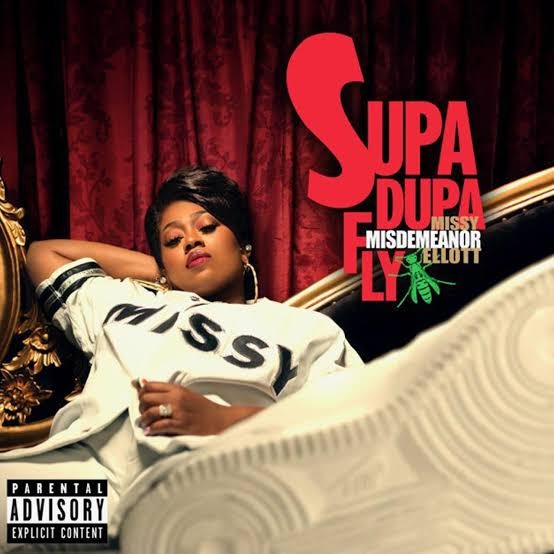
During a time when commercial hip hop was frowned upon, and heavily criticized, Missy Elliott proved there could be originality in it. Not afraid to experiment with different genres, and have a unique personality, Missy’s ear for beats helped the quality of her music as well. With the help of Timbaland (who was relatively unknown at the time), a fresh, innovative production style was heard by the world. Missy’s style was unique too, she had a melodic delivery, as well as her unorthodox rap style not yet heard by a female in hip hop, and hardly even heard by males in hip hop. Perhaps one of the most versatile female MC’s of all time, it would make sense why she would team up with Timbaland, one of the most versatile hip hop producers of all time. Timbaland’s production style, as proven on this album, is original, versatile, and above all, sounds great. From smooth R&B sounds, to head-nodding hip hop tracks, Timbaland proved himself to be one of the best, and most versatile hip hop producers. Supa Dupa Fly is the debut studio album by American rapper Missy “Misdemeanor” Elliott, released July 15, 1997, on The Goldmind and Elektra Records. The album was recorded and produced solely by Timbaland in October 1996, and features the singles, “The Rain (Supa Dupa Fly)”, “Sock It 2 Me”, “Hit Em wit da Hee” and “Beep Me 911”. Guest appearances on the album include Busta Rhymes, Ginuwine, 702, Magoo, Da Brat, Lil’ Kim, and Aaliyah. The album was recorded in just two weeks. The album received acclaim from critics, who praised Timbaland’s futuristic production style and Elliott’s performances and persona. It debuted at number three on the US Billboard 200 and topped the US Top R&B/Hip-Hop Albums chart. The album was certified platinum by the Recording Industry Association of America (RIAA) and has sold 1.2 million copies in the United States.In 2020, the album was ranked 93 on Rolling Stone’s 500 Greatest Albums of All Time and, in 2022, 53 on their 100 Best Debut Albums of All Time. Missy Elliott’s melodic, sing-song delivery helped her songs sound better, and keeps the listener interested throughout the album. On top of being a talented rapper, Missy Elliott is a very talented singer as well. Missy Elliott had head-nodding hip hop tracks (“Izzy Izzy Ahh”, “Gettaway”), great R&B tracks (“Why You Hurt Me”, “Friendly Skies”, “Best Friends”), and more sounds to keep you interested. There’s enough diversity on this album to make you want to come back to it, and just general great music. Supa Dupa Fly is a fantastic album, and Missy Elliott’s magnum opus. From the production, to Missy’s delivery, this album, as Busta Rhymes describes it in his outro, is an emotional roller coaster. From front to back, this album should keep you interested with its diversity, both in production and lyrical styles. One of the gems from the commercial rap era. Supa Dupa Fly debuted at number three on the US Billboard 200 with 129,000 copies sold in the first week released,becoming the highest debut for a female rapper at the time.The album remained on the chart for 37 weeks. On September 19, 1997, the album was certified platinum by the Recording Industry Association of America (RIAA) for sales of over a million copies.As of June 2008, it has sold 1.2 million copies in the United States. References  Wikipedia.com sputnikmusic.com all music.com

Missy Eliott, Super Dupa Fly Album Review by Rahmon Read More »

Hip-Hop and Politics: The US Presidential Elections

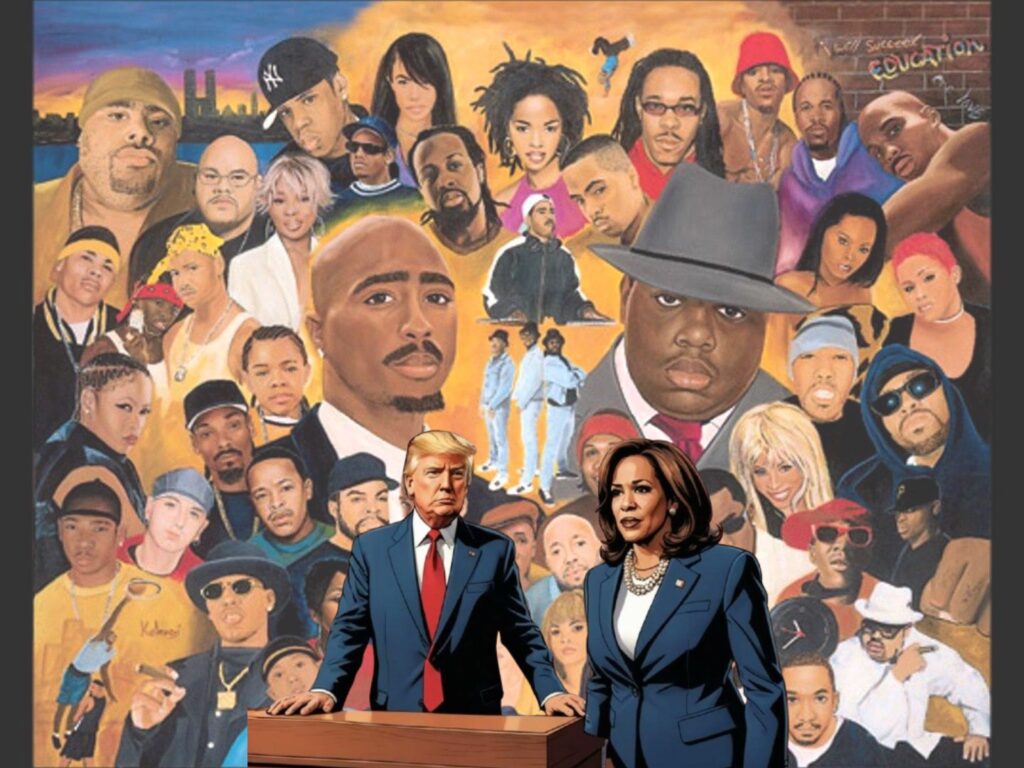
The involvement of Hip-Hop in politics is no longer news. However, Hip-Hop’s involvement in the 2024 US Presidential elections appears to be the biggest after Jeezy of Atlanta and the legendary Nas proclaimed, “My president is Black!” during candidate Barack Obama’s 2008 presidential run. The historic election of the first Black president went beyond politics. It birthed the election of the first hip-hop president. Hip-Hop culture became a vessel for social impact through politics.  Jay-Z campaigned for Obama in 2012 and was a frequent White House guest with Beyoncé, who sang the national anthem at Obama’s second inauguration in 2013. They also stumped for presidential candidate Hillary Clinton during her own historic 2016 run. As for Harris, she has the backing of a strikingly diverse group of hip-hop artists and producers, such as Eminem, Will.Iam, Questlove, Common, Fat Joe, J.Lo, MC Lyte, Cardi B, Beyoncé, Lil Nas X, Lil Jon, and Plies. Eminem introduced Obama in his hometown ,Detroit,  at Harris’ campaign and Obama returned the favour by rapping “Lose Yourself” by the former. Trump seemed to prefer coming onstage to “Many Men” by 50Cent for some of his campaign after the attempted assassination. 50 Cent claimed to have turned down a $3m offer to perform at his campaign.  And, it’s not one sided. Recently, rapper and criminal justice reform advocate Meek Mill challenged Kamala Harris’ record during her terms as district attorney of San Francisco from 2004 to 2011. “I wanna ask Kamala Harris questions about her past as a DA, even if she had to be tough. All I hear is rumors of her,” the 37-year-old rapper posted on X, formerly known as Twitter. “I would ask her 3 questions about black and brown men going to prison and her views and try to help her understand from a survival standpoint point she may have never had to encounter!” The Facebook post that said Harris placed 1,500 Black men behind bars over marijuana charges as district attorney has been reportedly debunked. It is reported that Harris actually oversaw 1,956 felony marijuana convictions. Only 45 people were sent to state prison. Nonetheless, the issue has emboldened some hip-hop artists’ support for former president Donald Trump. Lil Pump, Waka Flocka Flame, Lil Wayne, Kanye West, and Sheff Gare are some of the rappers who have publicly backed the Republican candidate. Sexyy Redd received backlash after she told podcast host Theo Von in October 2023 that some Black people embraced Trump “once he started getting Black people out of jail and giving people that free money.”  “We love Trump,” Sexyy Redd said. “We need him back in office. We need him back because, baby, them checks. Them stimulus checks. Trump, we miss you.” As documented in the Andscape film “Hip-Hop and the White House”, this unlikely political connection go way back to President Ronald Reagan’s 1985 inaugural ball, where legendary actor Jimmy Stewart introduced a performance by the storied New York City Breakers crew. Ironically, it was Reagan’s devastating policies targeting the Black and Latino community that accelerated Hip-Hop’s growth as the decade’s most vital musical and cultural art form. “Too Short, Ice-T, Toddy Tee, Public Enemy,” Hip-Hop and the White House’s executive producer and narrator Jeezy said. “Those are just a few rappers who reveal what Reagan’s so-called war on drugs did to the places where hip-hop lived.” In Nigeria,  Tuface, Falz, Mi, and some other rappers have continuously stood up for social change through political activism and their lyrics.  One thing is clear, regardless of the outcome of the election: Hip-Hop culture matters in politics and in shaping government policies towards the youth demography in the US.  Hip-Hop’s cousin, Afrobeats, has similar potential in Nigeria. We are watching.  References: “Andscape: Kamala Harris Gets her Hip-Hop Close up”: https://andscape.com/features/kamala-harris-gets-her-hip-hop-close-up/ Washington Times-“Foul Mouthed Rappers Supporting Kamala Harris”:  XXL Magazine-Rappers Supporting Vice President Kamala Harris : https://www.xxlmag.com/rappers-supporting-vice-president-kamala-harris/ Pulse.ng-“Falz and 4 other Nigerian Celebrities Who are Political Activists: 

Hip-Hop and Politics: The US Presidential Elections Read More »

Ghostface Killah: A Real Life Super Hero and More

Whether judged strictly by his work with Wu-Tang Clan or as a solo artist, Ghostface Killah is an indisputable giant. A masterful storyteller whose range extends from graphic crime fantasies to stirring autobiographical recollections, the rapper first appeared with his Staten Island group’s trail-blazing Enter the Wu-Tang (1993) and started building a vast solo discography with Ironman (1996). Dennis Coles (born May 9, 1970),better known by his stage name Ghostface Killah, is an American rapper and songwriter. He is a member of the hip hop group Wu-Tang Clan.After the group achieved breakthrough success in the aftermath of Enter the Wu-Tang (36 Chambers), the members went on to pursue solo careers to varying levels of success. Ghostface Killah debuted his solo career with Ironman, which was well received by music critics, in 1996. He has enjoyed continued success in the years that have followed, releasing critically acclaimed albums such as Supreme Clientele (2000) and Fishscale (2006). His stage name was taken from one of the characters in the 1979 kung fu film Mystery of Chessboxing. He is the founder of his own record label, Starks Enterprises.  His platinum-certified debut strengthened a partnership with the RZA, whose bracing mutations of dusty soul have either soundtracked or influenced much of his best output. After an occasionally commercial early period with Epic that yielded a second classic, Supreme Clientele (2000), Ghost moved to Def Jam, where he released six additional solo LPs highlighted by his fourth Top Ten pop album, Fishscale (2006). Throughout the following decade, Ghost added to his legacy with a series of creatively unrestricted works, many of which were whole-album collaborations, conceived with the likes of the RZA-inspired Adrian Younge, BadBadNotGood, and Czarface. These included the two-volume Twelve Reasons to Die (2013 and 2015), Sour Soul (2015), and Czarface Meets Ghostface (2019). The rapper born Dennis Coles emerged from his native Staten Island as part of Wu-Tang Clan, who released their first single in 1992 and became one of the strongest hip-hop institutions the following year with Enter the Wu-Tang (36 Chambers). On the album’s fifth and final single, “Can It Be All So Simple,” Ghostface rhymed about his intent to “make more hits with Rae and A,” singling out fellow Wu-Tang members Raekwon and the RZA. He quickly achieved his goal. In August 1995, a few months after Enter the Wu-Tang was certified platinum, “Tony Starks (Ghost Face Killer)” was billed as guest star on Raekwon’s RZA-produced Only Built 4 Cuban Linx. Among the tracks featuring Ghost were the preceding lead single “Heaven & Hell,” a remix of “Can It Be All So Simple,” and the Top Five Billboard rap hits “Criminology” and “Ice Cream.” During the same year, Ghost linked with Raekwon and RZA on other Wu-Tang projects, namely Ol’ Dirty Bastard’s Return to the 36 Chambers and GZA’s Liquid Swords, and took part in the making of yet another classic, Queensbridge duo Mobb Deep’s The Infamous. These appearances, plus subsequent headlining contributions to the soundtracks of Don’t Be a Menace to South Central While Drinking Your Juice in the Hood and Sunset Park, primed Ghost for his own solo breakout. Signed to major-label Epic via an arrangement with RZA boutique label Razor Sharp, Ghostface Killah became the fifth Wu-Tang member to release a solo album when Ironman was racked in October 1996. Continuing Wu-Tang’s unprecedented spate of spin-off releases, the LP entered the Billboard 200 at number two and topped the R&B/hip-hop chart. RZA served as producer. Raekwon and Ghost’s fellow Razor Sharp signee Cappadonna were featured throughout. Its deep R&B foundation and wide emotional range were promoted in the choice of singles, including the strong-arming and deceptively intricate “Daytona 500” (assisted by the Force M.D.’s) and the bleak autobiographical ballad “All That I Got Is You” (featuring Mary J. Blige). The album was certified gold within three months (and years later went platinum). Between one-off featured roles and his group’s return with Wu-Tang Forever, Ghost put solo activity on hold. He and RZA also spent time in Africa, an experience that fueled the writing of Supreme Clientele, the second Ghostface Killah LP. Production-wise, RZA handled a few tracks on his own and vacated his seat for affiliate beatmakers such as Ju-Ju (the Beatnuts), Hassan (the U.M.C.’s), and Carlos Bess, though he did touch every cut in some capacity. The album went Top Ten pop and number two R&B/hip-hop upon its February 2000 release, and shortly thereafter went gold, pushed by “Apollo Kids” and “Cherchez LaGhost,” both of which charted. “Cherchez LaGhost” actually became Ghost’s biggest single as a lead artist — a number three hit on Hot Rap Songs. That song’s comparatively lighter approach carried into Bulletproof Wallets, which rather expeditiously arrived in November 2001 as Ghost’s third solo album. Like “Cherchez LaGhost,” “Ghost Showers” was built on one of August “Kid Creole” Darnell’s high-spirited compositions, and was almost as successful, topping out at number 11 on the rap chart. Veering even farther away from RZA-style grime was another single, “Never Be the Same Again,” a smooth contemporary R&B production with then-hot Bad Boy artist Carl Thomas on the hook. Only four weeks after the album’s arrival, however, Wu-Tang Clan returned again with Iron Flag, highlighted by the hard-hitting “Uzi (Pinky Ring),” on which Ghost was back in his familiar raw form. Ghost’s next move, The Pretty Toney Album, issued in April 2004 as his first full-length for Def Jam, gunned for pop success with the Missy Elliott collaboration “Tush.” It was otherwise more street-oriented than Bulletproof Wallets, outfitted with tougher productions from the likes of RZA, No I.D., Nottz, and K-Def. Only a few months after it became Ghost’s third album to reach the pop Top Ten, the group Theodore Unit — primarily an outlet for Ghost and Trife da God, but open to several other artists — released the album 718 on the independent Sure Shot label. Theodore Unit ground to a halt, but not before welcoming Sun God, Ghost’s son. Ghost’s Def Jam

Ghostface Killah: A Real Life Super Hero and More Read More »

From Rap Legend to Business Mogul, Master P is Indeed a Master of all

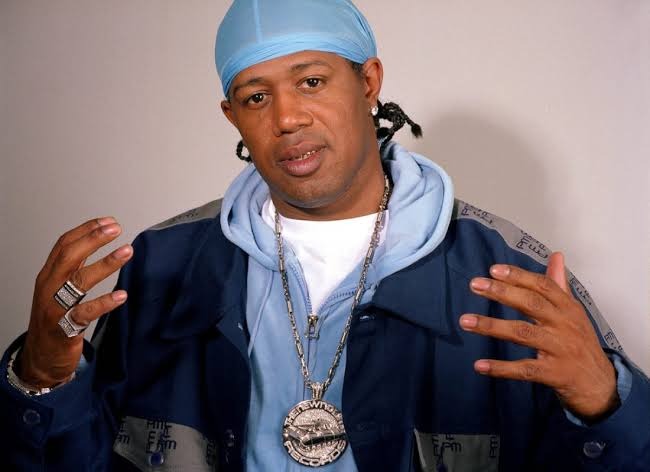
Throughout the late ’90s, Master P created a hip-hop empire while flying just beneath the mainstream radar. As the CEO of No Limit Records, he led a camp of prolific artists who redefined rap through innovative production and lyrics derived directly from lived experiences in some of America’s toughest streets. Master P wasn’t just a label head but a rapper himself, actively creating music from his independent beginnings in the early ’90s to mainstream success by the end of the decade. In the years following his 1997 hit “Make ‘Em Say Uhh!,” Master P dabbled in a wide variety of business ventures outside of music. He’d try his hand at everything from acting to writing to involvement with professional wrestling, while periodically releasing new albums like 2016’s Louisiana Hot Sauce and the 2020 mixtape No Limit Chronicles: The Lost Tape. Percy Robert Miller Sr. (born April 29, 1970), also known by his stage name Master P, is an American rapper, record executive, actor, and entrepreneur. He is the founder of the record label No Limit Records, which was relaunched as New No Limit Records through Universal Records and Koch Records, and again as Guttar Music Entertainment, and currently, No Limit Forever Records. He is also the founder and CEO of P. Miller Enterprises and Better Black Television, which was a short-lived online television network.  Miller initially gained fame in the mid-1990s with the success of his hip hop group TRU as well as his fifth solo rap album Ice Cream Man, which contained his first single “Mr. Ice Cream Man”. Miller gained further popularity in 1997 after the success of his Platinum single “Make ‘Em Say Uhh!”. In total, Miller has released 15 studio albums. Percy Robert Miller was born and raised in Central City in the Third Ward of Uptown New Orleans, Louisiana in the Calliope Projects. He is the oldest of five children. He has one sister, Germaine, and three brothers: Kevin, and platinum-selling rap artists Corey “C-Murder” and Vyshonne “Silkk the Shocker” Miller. He attended Booker T. Washington High School and Warren Easton High School. Having played on the basketball team, Miller attended the University of Houston on an athletic scholarship, but dropped out months into his freshman year and transferred to Merritt College in Oakland, California to major in business administration.After the death of his grandfather, Miller inherited $10,000 as part of a malpractice settlement. Miller opened a record store in Richmond, California called No Limit Records, which later became the foundation for his own record label of the same name. On February 15, 1990, Master P released the cassette tape Mind Of A Psychopath. His brother Kevin Miller was killed that same year in New Orleans. This increased his motivation to become a successful entrepreneur to change his life and save his family. While working at No Limit, Master P learned that there was a rap audience who loved funky, street-level beats that the major labels weren’t providing. Using this knowledge, he decided to turn No Limit into a record label in 1990. The following year, he debuted with Get Away Clean and later had an underground hit with The Ghettos Tryin to Kill Me! in 1994. Around this same time, the compilation West Coast Bad Boyz, which featured rappers Rappin’ 4-Tay and E-40 before they were nationally known, was released and spent over half-a-year on the charts. These latter two albums were significant underground hits and confirmed what Master P suspected: there was an audience for straight-ahead, unapologetic, funky hardcore rap. He soon moved No Limit to New Orleans and began concentrating on making records. By the mid-’90s, No Limit had developed its own production team, Beats by the Pound (comprised of Craig B., KLC, and Mo B. Dick), who worked on every one of the label’s releases. And there were many of them at the rate of nearly ten a year, all masterminded by Master P and Beats by the Pound. They crafted the sound, often stealing songs outright from contemporary hits. They designed album covers, which had the colorfully busy look of straight-to-video exploitation films. And they worked fast, recording and releasing entire albums, some in two weeks. Included in that production schedule were Master P’s own albums. 99 Ways to Die was released in 1995, and Ice Cream Man appeared the following year. By the time Ghetto D was released in the late summer of 1997, Master P had turned No Limit into a mini-empire. “Make ‘Em Say Uhh!,” a single from Ghetto D marked by P’s telltale groan, would go platinum and Tru — a group he formed with his younger brothers Silkk the Shocker and C-Murder — had Top Ten R&B hit albums. His success in the recording industry inspired him to make I’m Bout It, an autobiographical comedy-drama titled after Tru’s breakthrough hit. Master P financed the production himself, and when he found no distributor, it went straight to video in the summer of 1997. His next film, I Got the Hook Up, appeared in theaters during the summer of 1998, concurrent with the release of his album MP da Last Don. In between flirtations with the sports world — including a tryout with the NBA’s Toronto Raptors, involvement with pro wrestling, and negotiating the NFL contract of Heisman Trophy winner Ricky Williams — Master P recorded 1999’s Only God Can Judge Me. Ghetto Postage, and Game Face. The double-CD Good Side, Bad Side appeared in 2004 and marked P and No Limit’s new relationship with the label/distribution company Koch. Both Ghetto Bill and Living Legend: Certified D-Boy arrived a year later. The 2007 compilation Featuring…Master P rounded up some of the rapper’s collaborations. Throughout the 2000s and into the 2010s, P continued releasing new music periodically and starting up various business and entertainment ventures. Aside from being a rapper, Master P has enjoyed a successful career as an entrepreneur and investor. Miller opened a record store in Richmond, California called No Limit Records, which later became

From Rap Legend to Business Mogul, Master P is Indeed a Master of all Read More »

Legend Too $hort, Celebrating One of HipHop’s Great

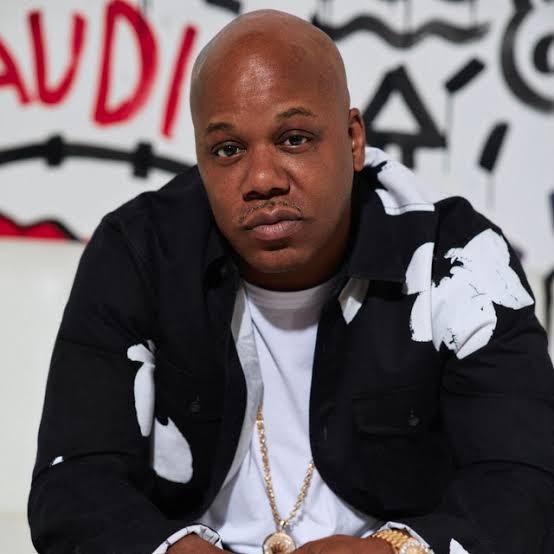
Too $hort was among the first West Coast rap stars, recording three albums on his own before he made his major-label debut in 1988 with the RIAA-certified gold Born to Mack. Todd Anthony Shaw (born April 28, 1966),better known by the stage name Too Short (stylized as Too $hort), is an American rapper and record producer. He became famous in the West Coast hip hop scene in the late 1980s, with lyrics often based on pimping and promiscuity, but also drug culture and street survival;the latter in songs such as “The Ghetto” and the former in songs such as “Blow the Whistle”. Anticipating much of the later gangsta phenomenon, he restricted his lyrical themes to explicit tales of sexual prowess and street life, with the occasional social message track to mix things up. Likely the only rapper to have recorded with 2Pac, the Notorious B.I.G., and Jay-Z all superstars indebted to his work he has remained an inspiration for his vulgar verses and sparse instrumentals, remaining an iconic presence in the hip-hop landscape through the ensuing decades with projects like 2020’s E-40 collaboration Ain’t Gone Do It/Terms and Conditions. Too $hort grew up in South Central Los Angeles. Soon after his family moved to Oakland in the early ’80s, he began selling tapes out of the back of his car. Signed to the local label 75 Girls, in 1985 he released his first proper album, Don’t Stop Rappin’. Two albums followed in the next two years, after which Too $hort formed his own Dangerous Music label with friend Freddy B. He released Born to Mack in 1987, and sold more than 50,000 copies just by riding around the region. New York’s Jive Records picked up on the buzz from across the country, and re-released the album one year later. With virtually no radio airplay, Born to Mack went gold and its follow-up, Life Is…Too Short, achieved platinum sales by 1989. Immense underground success and nationwide distribution primed Too $hort for radio airplay. “The Ghetto,” from 1990’s $hort Dog’s in the House, made number 12 on the Billboard R&B/hip-hop chart and enjoyed a brief stay just outside the Top 40 of the Hot 100. The roll continued with 1992’s Shorty the Pimp and 1993’s Get in Where You Fit In, both of which went platinum. By the time of 1995’s Cocktails, however, Too $hort began to be drowned out by a glut of similar-sounding West Coasters, and though Gettin’ It (Album Number Ten) eventually became his sixth platinum album, by late 1996 he decided to retire. Three years later, however, he returned with Can’t Stay Away, which debuted in the Top Ten and went gold. Back for the long term, Too $hort released four albums during the next four years, then in 2006 scored one of his biggest hits with the Lil Jon-produced title track for Blow the Whistle. After Get Off the Stage was released in 2007, Too $hort returned to independence. During the 2010s, he issued the albums Still Blowin’, No Trespassing, the guest-loaded Hella Disrespectful: Bay Area Mixtape, The Sex Tape Playlist, and The Pimp Tape, on his Dangerous Music label. He rounded out the decade in 2019 with the release of his 21st studio album, The Vault. The next year he returned with fellow Bay Area legend E-40 on the collaborative mixtape Ain’t Gone Do It/Terms and Conditions. In addition to the two headliners, the tape included guest spots from Larry June, Freddie Gibbs, G-Eazy, Guapdad 4000, and many others. Too $hort remains a major force on the mainstream and underground scenes in the new millennium, making him one of the most enduring success stories to emerge from the rap scene. On October 7, 2008 Too Short was honored by VH1 at the fifth annual “Hip-Hop Honors” along with Cypress Hill, De La Soul, Slick Rick and Naughty By Nature.

Legend Too $hort, Celebrating One of HipHop’s Great Read More »

Shopping Cart